
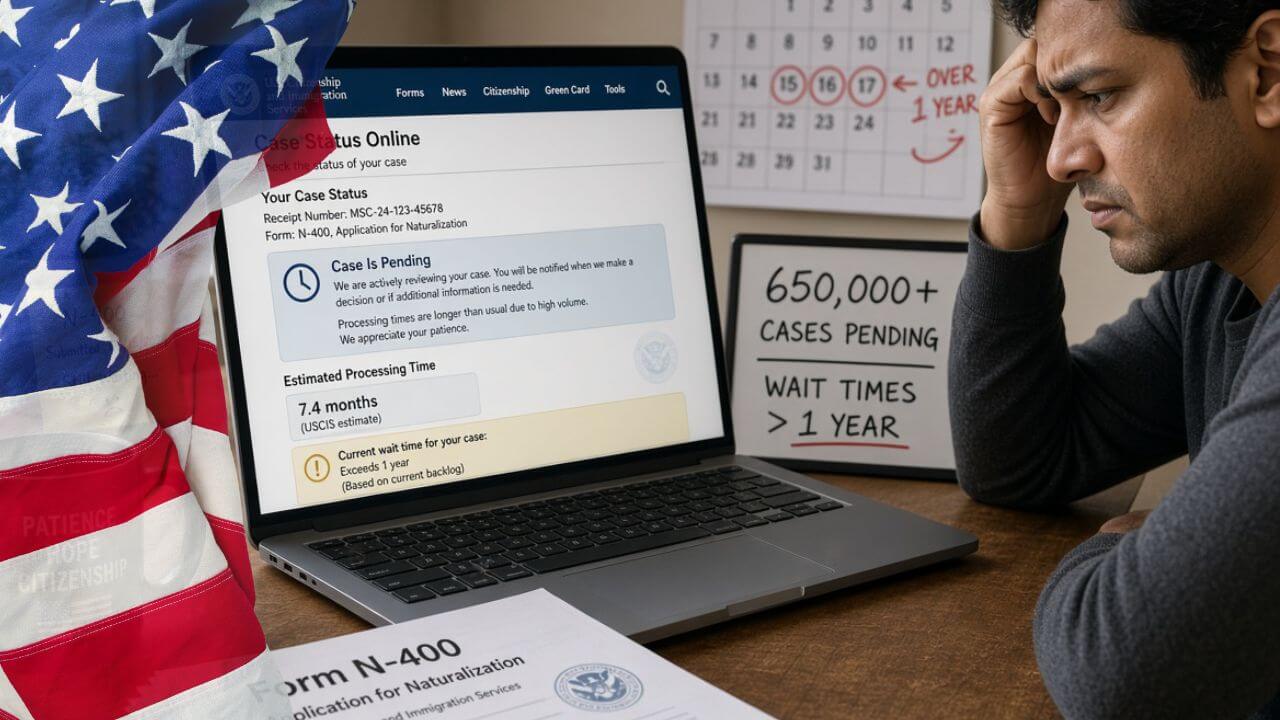
If you have filed your N-400 citizenship naturalization application and you are waiting significantly longer than the processing time estimates on the USCIS website suggest, you are not imagining it and you are not alone. The gap between what USCIS officially reports as average processing time and what applicants are actually experiencing in 2026 is significant, and the numbers behind the backlog explain why.
What do the USCIS processing numbers actually show?
Between January and March of 2026, USCIS received approximately 135,000 N-400 naturalization applications. During that same period, the agency adjudicated approximately 96,000 cases. That means during those three months alone, USCIS fell behind by approximately 40,000 cases. The agency processed fewer applications than it received, so the backlog grew rather than shrank during that period.
The current total number of N-400 cases pending with USCIS sits at approximately 650,000. That is a substantial backlog of citizenship applications from people who have been waiting for interviews, decisions, and the opportunity to complete their immigration journey. Every month that USCIS receives more applications than it adjudicates, that number grows.
What does USCIS say the processing time is and what are applicants actually experiencing?
USCIS reports an average processing time of approximately 7.4 months for N-400 naturalization applications. Based on the numbers described above, that figure already represents a significant wait for applicants who filed expecting a faster resolution. But the official figure may not accurately reflect what applicants are experiencing on the ground.
Reports from clients, immigration communities, and applicants sharing their experiences indicate that many people are waiting considerably longer than 7.4 months. Wait times of one year and even a year and a half before receiving an interview notice are being reported with enough frequency to suggest that the official average does not capture the full range of what applicants are experiencing. The average can be pulled down by faster adjudications in certain field offices while other offices are moving significantly slower, creating a gap between the reported figure and the reality for many applicants.
Why is the backlog growing?
There are several factors contributing to the growing naturalization backlog. Staffing levels and resource allocation at USCIS affect how many cases can be adjudicated in a given period. When the agency is receiving more applications than it has capacity to process, the backlog grows regardless of how efficiently individual officers are working.
There is also a question of prioritization. USCIS manages an enormous volume of different application types simultaneously, and decisions about how to allocate resources across those types affect how quickly any one category moves. Naturalization, while important, competes with adjustment of status cases, work permit renewals, petitions, and other filings for the same agency resources.
Is the timing of the naturalization backlog intentional?
This is a question that is difficult to answer definitively but that naturally arises when a backlog of this size develops in an election-adjacent period. New citizens are voters, and there is a long history of concern about whether naturalization processing speeds are influenced by political considerations around election timing. Whether the current backlog reflects deliberate slowdown, resource constraints, policy priorities, or simply the accumulated effect of high application volumes and limited capacity is not something that can be established from outside the agency.
What can be observed is that the backlog exists, that it is growing, and that many applicants are waiting significantly longer than official estimates suggest. The hope is that as the current election cycle concludes, resources will be directed toward reducing the citizenship backlog and allowing the hundreds of thousands of applicants who have been waiting to complete their immigration story.
What does this mean practically for N-400 applicants?
If you have filed your N-400 and you are in the queue, the most important thing to understand is that a long wait does not necessarily indicate a problem with your case. In the current environment, waiting one year or more for a naturalization interview is not unusual and is not necessarily a signal that something has gone wrong with your application.
That said, there are situations where taking action makes sense. If your case has been pending significantly longer than the posted processing time for your specific field office, you may be able to submit a case status inquiry through USCIS or request an infopass appointment to check on the status. If there is a specific need to expedite your case, such as an urgent humanitarian reason, an imminent trip, or a qualifying reason under USCIS expedite criteria, an expedite request can be submitted with supporting documentation.
Working with an immigration attorney who monitors processing times and field office trends can help you understand whether your wait is within the normal range for your jurisdiction or whether some form of follow-up is appropriate.
What should you do if you have not yet filed?
If you are eligible to apply for naturalization and you have been waiting to see how processing times develop, the practical advice remains the same as it has been throughout the current policy environment. File when you are ready and your case is strong. A case that is in the queue is closer to completion than a case that has not been filed. Processing times can improve as well as worsen, and having your application in the system positions you to benefit from any acceleration in adjudications.
The citizenship backlog is a real challenge for hundreds of thousands of applicants. But completing the immigration journey remains the goal, and the path to that completion goes through a filed N-400 regardless of how long the wait turns out to be.
Download our free Ultimate Naturalization Guide for Citizenship at JQKLaw.com/citizenship, join Attorney John Khosravi, Esq. live every Tuesday at 4 PM PT / 7 PM ET on YouTube, LinkedIn, Instagram, and TikTok for a free Q&A, or book a one-on-one consultation at JQKLaw.com/contact.

